Knurl · for factorys10–500 machines · multi-shift · downtime measured in dollars
Factories

Downtime measured
in dollars. Prevented
in minutes.

Knurl puts a sticker on every machine and a work-order app in every technician's pocket. Breakdowns are logged the moment they happen. Preventive schedules run themselves. The line manager sees real downtime — not someone's best guess at the standup.
A 50-machine line
Operations
Setup time
A morning
Per-user fee
None
Audit trail
Built in
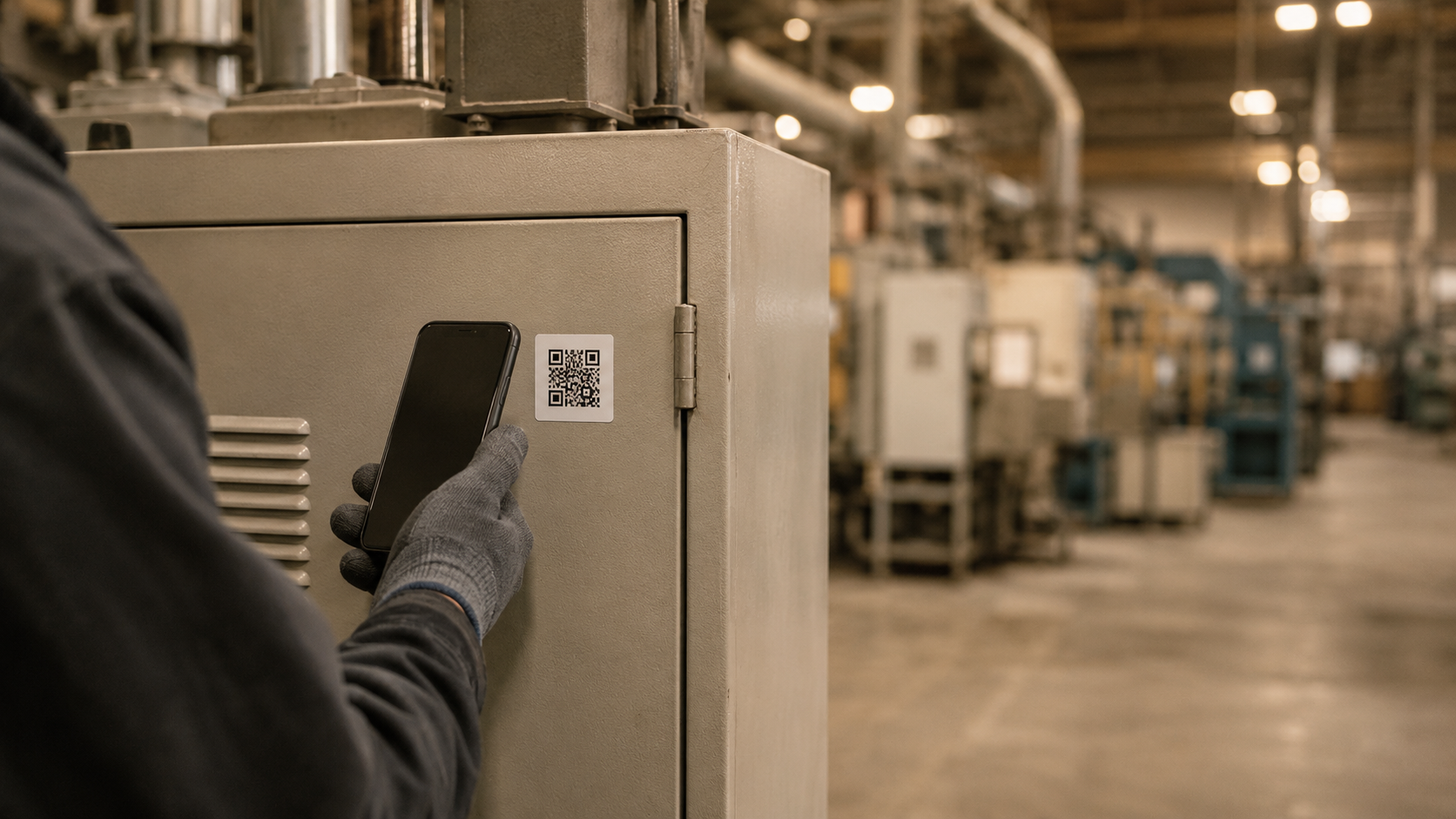
A gloved hand scanning a QR sticker on a painted-steel electrical cabinet on a factory floor.
Machine fault · tech scans · WO opens · part used · photo · closed. Downtime clock runs the whole way.
Why factories need Knurl

The PMs live in someone's head. The repair history lives in WhatsApp.

When the line goes down, the cost is per minute. But the spare-parts count is on a wall whiteboard, the last fix is in a chief mechanic's memory, and the preventive schedule is a printed PDF taped to a press. None of that survives a shift change — let alone an ISO audit.

Before · Group chat
“Is it fixed yet?”
Linda · GM · 9:14
Espresso group-head leaking again 🤦
Marco · Eng. · 9:17
Is this the same one from Tuesday?
Linda · GM · 9:18
I think so? Photo??
Sam · Night tech · 9:42
fixed
Linda · GM · 10:03
Did you replace the gasket?
Linda · GM · 11:20
Sam?
No timestamp. No photo. No record. Three days later — was this even fixed?
After · Knurl
“Fixed. Photo attached.”
Who, when, what. Searchable on Friday. Defensible at the next inspection.
Knurl · for factorys
One queue. PM-on-time, real downtime per asset, parts that count themselves. Defensible at the next audit.
What changes for you

Four things that should be free for a factory maintenance manager.

Real downtime per asset — not a guess at the standup.

The WO clock starts when the fault is reported and stops when it's closed with a photo. Reports show downtime per machine, per line, per shift. Bad actors stop hiding in folklore.

Reports & analytics — Pro+

Preventive schedules that actually run.

Recurring PMs on time or runtime hours land in the same queue as breakdowns. Skipped PMs turn red on the dashboard. The shop floor stops 'forgetting' to grease the bearings.

PM scheduling — Pro+

Spare parts that count themselves.

Tag a part used on a job; stock decrements automatically; low-stock alerts go to the right person; raise a PO from the alert. 'We're out of bearings' becomes a problem the system already flagged.

Inventory + POs — Pro / Ent

The whole shop floor — a morning's work.

Print QR labels, walk the floor, stick one on each machine. Big assets, support equipment, fork-lifts, the conveyor. The phone is the scanner; nothing else to buy.

Zero hardware beyond the sticker
Sizing

Which tier is your plant?

Pricing is by asset count, not machine count — but the two map closely.

Under 50 machines · single line
~30–60 assets
Team
Preventive schedules, parts inventory, time-on-job tracking. Where most single-shift plants start.
50–200 machines · multi-shift
~60–500 assets
Operations
Vendor directory, purchase orders, approval workflows, SLA timers, advanced downtime reports, public API + webhooks. The squeezed middle of serious manufacturing.
200+ machines · multi-plant
500+ assets · multi-site
Portfolio
Multi-facility switcher, cross-site PM templates, site benchmarking, roll-up reports. ERP integration + IoT + predictive at the Enterprise tier above.
All tiers: 14-day trial · no card · no setup fee· Exact prices on the pricing section of the home page
See full pricing
FAQ · factorys

What factory maintenance managers ask first.

Yes. When a work order is opened against a production asset, the clock starts; when it's closed, it stops. The reports view shows downtime per asset, per line and per shift. Pair it with the meter-reading feature on Professional to also count cycle counts, runtime hours and trigger preventive jobs.
Knurl writes an append-only event log on every state transition — actor, timestamp, action, photo, notes. The log can be exported via the public API or CSV. Auditors get a defensible trail; you don't assemble a binder.
Yes. Assign assets to a line; assign users to a team; the technician view filters to today's assigned work for their team. Managers see everything. Shift handover is automatic — the next shift opens the same queue and picks up where the last one left off.
On Enterprise. Pre-built connectors exist for the common ERPs; the public API + webhooks cover the rest. Work-order spend can flow back to cost centres; asset masters can be kept in sync. Talk to us about your stack.
From Team. Parts are linked to assets; using a part on a job decrements stock automatically; low-stock thresholds raise alerts. Purchase orders to replenish stock unlock on Operations and above. No more 'we're out of bearings' an hour into the breakdown.
Start now

Get a grip on your maintenance.
Fourteen days. No card.

Set up a facility, import your asset list, print stickers, invite your team. Most teams are tracking real work orders the same day.

Start 14-day trialTalk to us
Scan to download
app.knurl.work